

This post gathers 6 video color editor tools, including MiniTool MovieMaker, Microsoft Clipchamp, VSDC Free Video Editor, Lightworks, PowerDirector, and Adobe Premiere, to make your video look natural or achieve cinematic or creative effects.
To make a good-looking video, you should adjust the color of the video as your eyes perceive it. Typically, there’re 3 methods to edit the color in the video.
- Use the color adjustment tool
- Add a filter to the video
- Apply the LUT effect
This post will introduce 6 video color editors that can make your footage look as human eyes would see it in the real world and apply filters or 3D LUT effects for cinematic looks.
6 Best Video Color Editors at a Glance
- MiniTool MovieMaker 8.9
- Microsoft Clipchamp 4.5
- VSDC Free Video Editor 11.2
- Lightworks
- PowerDirector 24.3
- Adobe Premiere 26.3.2
The following table offers a concise overview of these video color editor tools. Check it to find your desired tool quickly.
| Software | MiniTool MovieMaker | Microsoft Clipchamp | VSDC Free | Lightworks | PowerDirector | Adobe Premiere |
| Platform | Windows | Windows / Web | Windows | Cross-platform | Mobile | Win / Mac |
| Price | Free + Paid | Free + Paid | Free | Free + Paid | Free + Paid | Paid |
| Watermark | No | No | No | No | The free trial adds a watermark | No |
| Manual Color Grading | Basic | Basic | RGB Curves | Professional | Basic | Professional |
| Filters | Yes | Yes | Yes | Yes | Yes | Yes |
| LUTs | Yes | No | Yes | Yes | Yes | Yes (Professional) |
| Learning Curve | Very easy | Easy | Moderate | Steep | Easy –moderate | Steep |
| Best For | Beginner color grading | Quick online editing | Advanced free color grading | Advanced color grading | Quick mobile editing | Professional color grading |
1. MiniTool MovieMaker
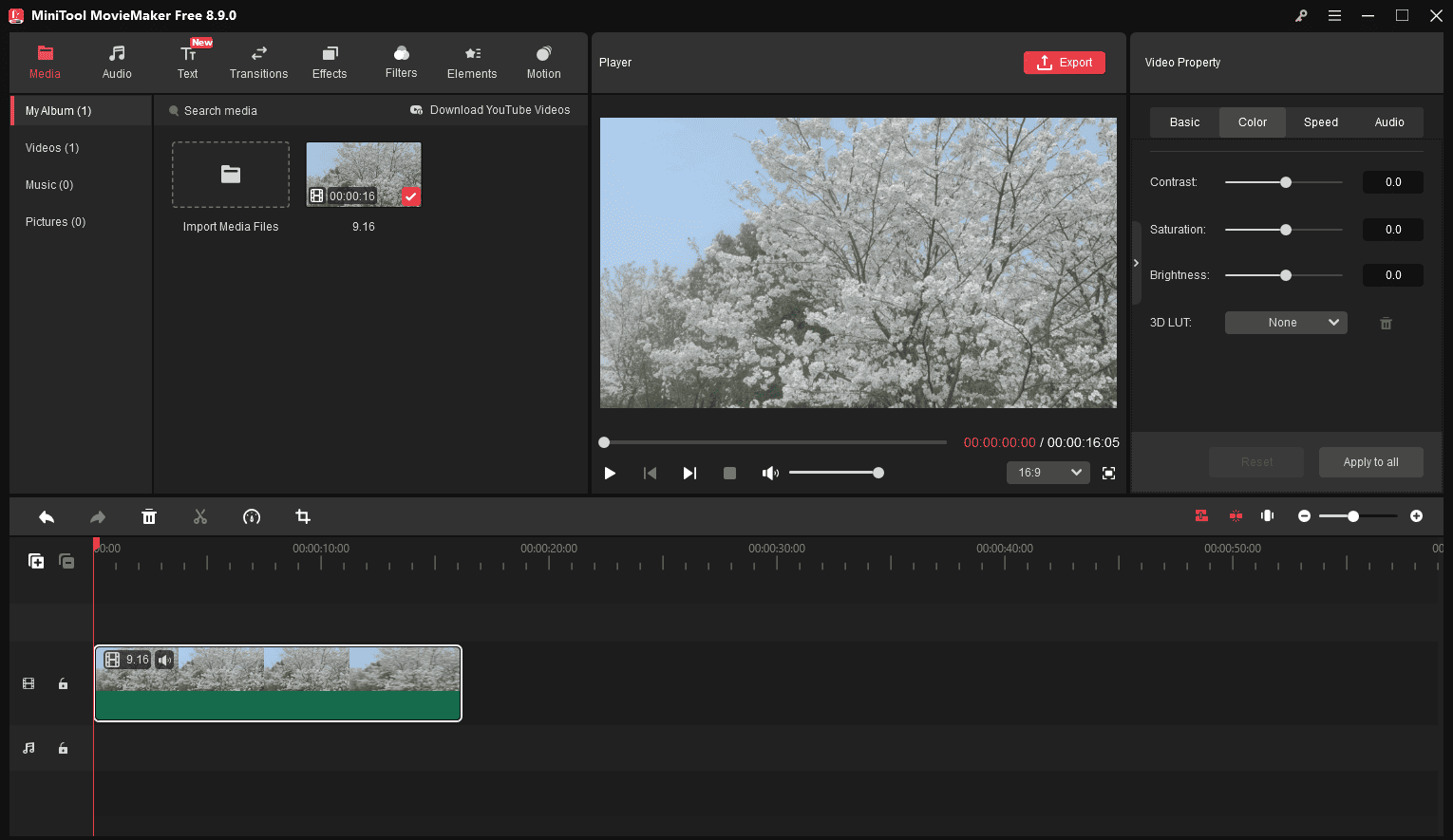
MiniTool MovieMaker is a simple and free video color editor for Windows beginners. This video editor is easy to use and has no bundles, no ads, and even no watermarks.
MiniTool MovieMakerClick to Download100%Clean & Safe
If your footage is too dark or too light, you can adjust contrast, saturation, and brightness to achieve a realistic look. If your video has no color-related issues and you just want it to be more creative or create an atmosphere, you can add a 3D LUT effect and filters. It has a variety of filters and 3D LUT effects for you to choose from. With just one click, you can give yout video a different look.
Additionally, the software enables you to trim, split, rotate, flip, slow down, speed up, and reverse videos, merge multiple clips into one, shorten long videos, add text and music to the video, apply a transition between two clips, etc.
But for anyone who wants a simple, clear way to join some video clips with transitions, place overlaid objects and text, add music, and bling it all up with some effects, MiniTool MovieMaker may be just the ticket.https://www.pcmag.com/reviews/minitool-moviemaker
2. Microsoft Clipchamp
If you need an online video color editor app, Clipchamp is recommended here. It’s very simple to use to adjust the colors in the video.
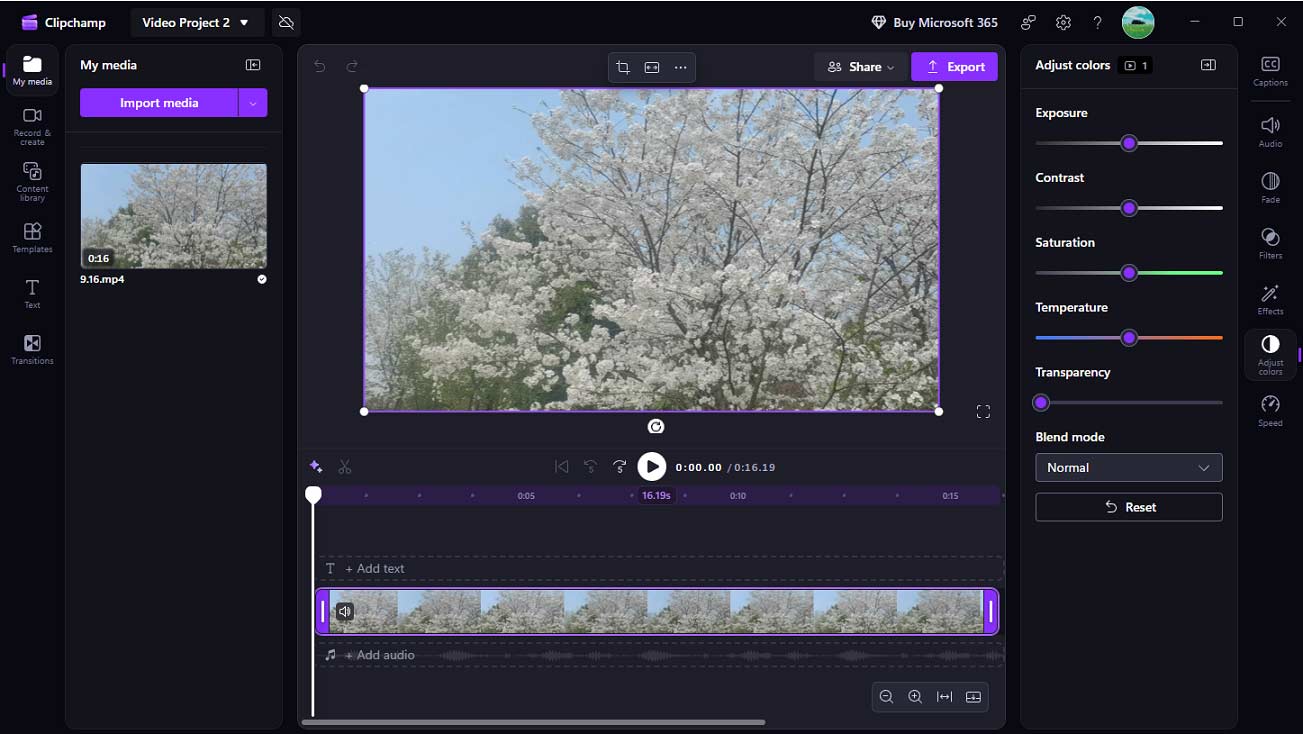
Firstly, you can edit the exposure, saturation, temperature, and contrast. Secondly, you can apply a video filter to make your video different, and Clipchamp has more than 20 filters.
To help you create stunning videos, Clipchamp also allows you to crop, flip, rotate videos, change video speed, add text to the video, apply transitions, change aspect ratio, and more.
Clipchamp does have adjustments for exposure, color temperature, contrast, and saturation.https://www.pcmag.com/reviews/clipchamp
3. VSDC Free Video Editor
If you need a powerful and free video color editor, try VSDC Free Video Editor. Basically, this software offers 3 methods to edit colors of a video, standard manual color adjustments, Instagram-like filters, and LUTs. The color adjustments tool allows you to manually adjust a clip’s brightness, temperature, contrast, saturation, hue, luminance, and other parameters by clicking Video effects Editing and Adjustments.
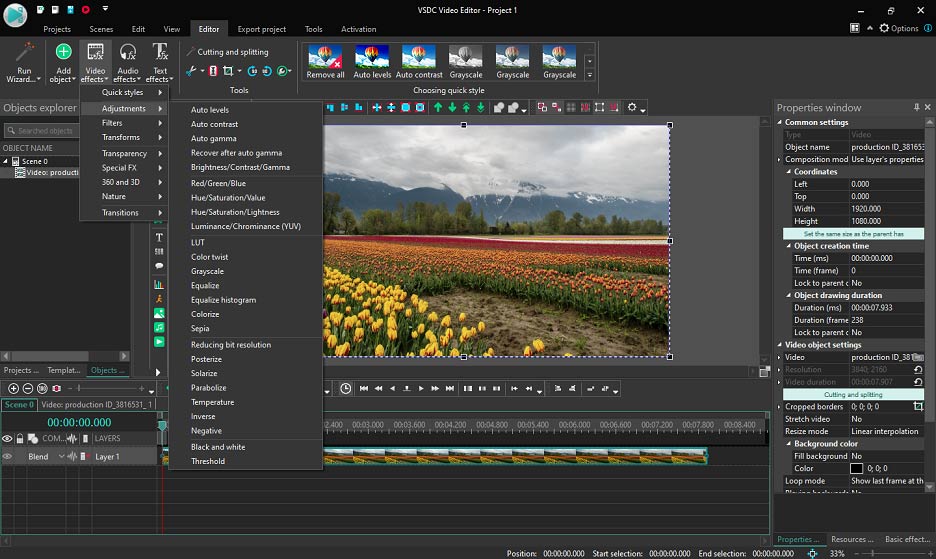
If your footage has no color issues and you just want it to look more beautiful, you can apply filters. VSDC offers multiple Instagram-like filters for your video in the Quick styles section. And you can add multiple styles to the same video.
As for the LUT (look-up table), VSDC has 10 preset LUTs for you to choose from, and you can also add downloaded LUTs from your computer. To apply a LUT, just right-click the video, select the Video effect > Adjustments > LUT.
If you need professional-level color editing, you can try VSDC’s RGB curves to change brightness and contrast levels of videos and photos and use the Hue and Saturation color wheel to correct color balance.
In addition to working as a video color correction app, VSDC Free Video Editor owns more features like the Chroma Key tool, 360 video editing tool, trendy video filters and transitions, and more.
VSDC offers color-wheel-based color grading. This pro-level capability is a staple of Adobe Premiere Pro and Final Cut Pro.https://www.pcmag.com/reviews/vsdc-video-editor-pro
4. Lightworks
Lightworks is another effective video color editor app that gives your footage the right feel and look to it. With a professional color correction tool, Lightworks allows you to adjust shadows, mid-tones, highlights, saturation, gamma, contrast, brightness, and gain.
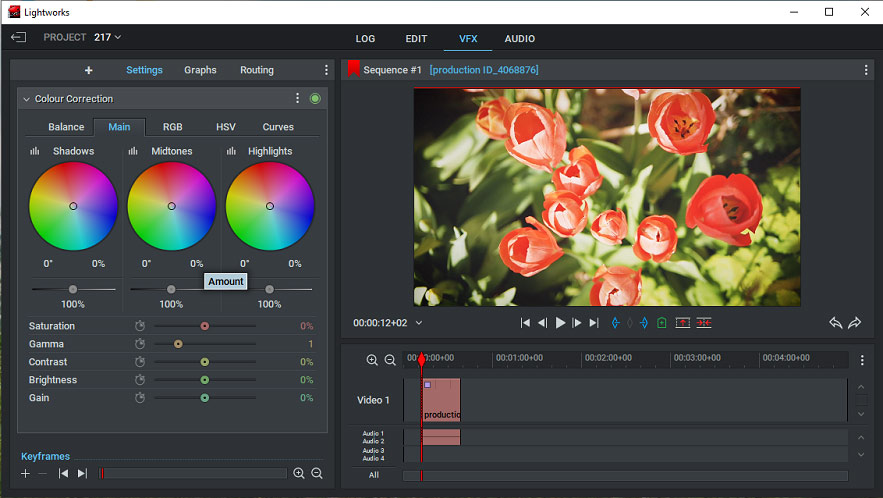
The color balance tool enables you to choose three colors to edit. The RGB tool lets you edit red, green, and blue channels individually to make different effects by changing gamma, contrast, brightness, and gain.
What’s more, Lightworks offers the HSV option to adjust the hue, saturation and value (HSV) settings and Curves option to set keyframes for RGB and Luminance profiles. And you can also apply a LUT effect and adjust its level.
Besides, Lightworks uses the color temperature tool to make videos lool warmer or cooler by increasing or decreasing the color temperature, and more.
All in all, Lightworks is a powerful video color editor that provides basic and advanced tools for beginners and professionals to perform perfect color editing of videos.
You get good color grading tools, though the program lacks a color-matching tool, which can lead to inconsistency in a project (especially those involving multicam effects).https://www.pcmag.com/reviews/lightworks
5. PowerDirector
PowerDirector is also one of the best video color editing apps. To adjust the colors in video clips for a natural appearance, this app offers a color adjustment tool to change the brightness, contrast, saturation, hue, tint, and sharpness.
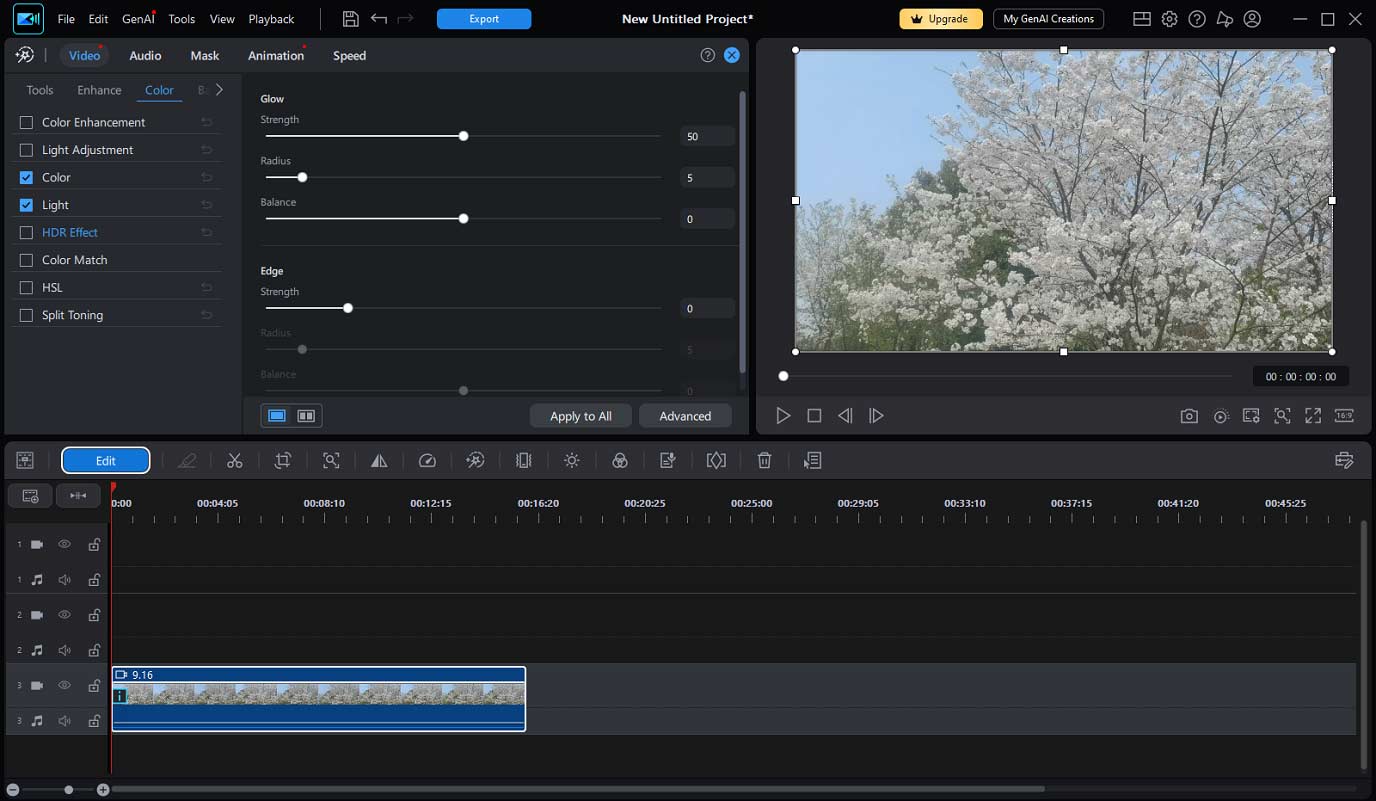
Also, you can choose a video filter from its library and add it to your video. Moreover, you can filter out color to give your footage a unique look.
What’s more, PowerDirector provides many other editing tools to trim, splice, rotate videos, fix shaky footage, change video background, make video and picture collages, control video speed, and more. It can edit and export videos in up to 4K.
Support for LUTs, or lookup tables, means you can apply a color mood like those you see in the cinema (think the cool blue look of The Revenant) to give your movie a uniform look.https://www.pcmag.com/reviews/cyberlink-powerdirector
![How to Convert Slow Motion Video to Normal Speed [Ultimate Guide]](https://images.minitool.com/moviemaker.minitool.com/images/uploads/2026/04/convert-slow-motion-video-to-normal-speed-thumbnail.jpg)
6. Adobe Premiere
If you need a powerful video color editing app, Adobe Premiere is a great choice. It has all-in-one color adjustment tools to adjust the color and luminance in video, correct the video that’s too dark or too light, etc. And users can directly edit the footage’s color on the timeline.
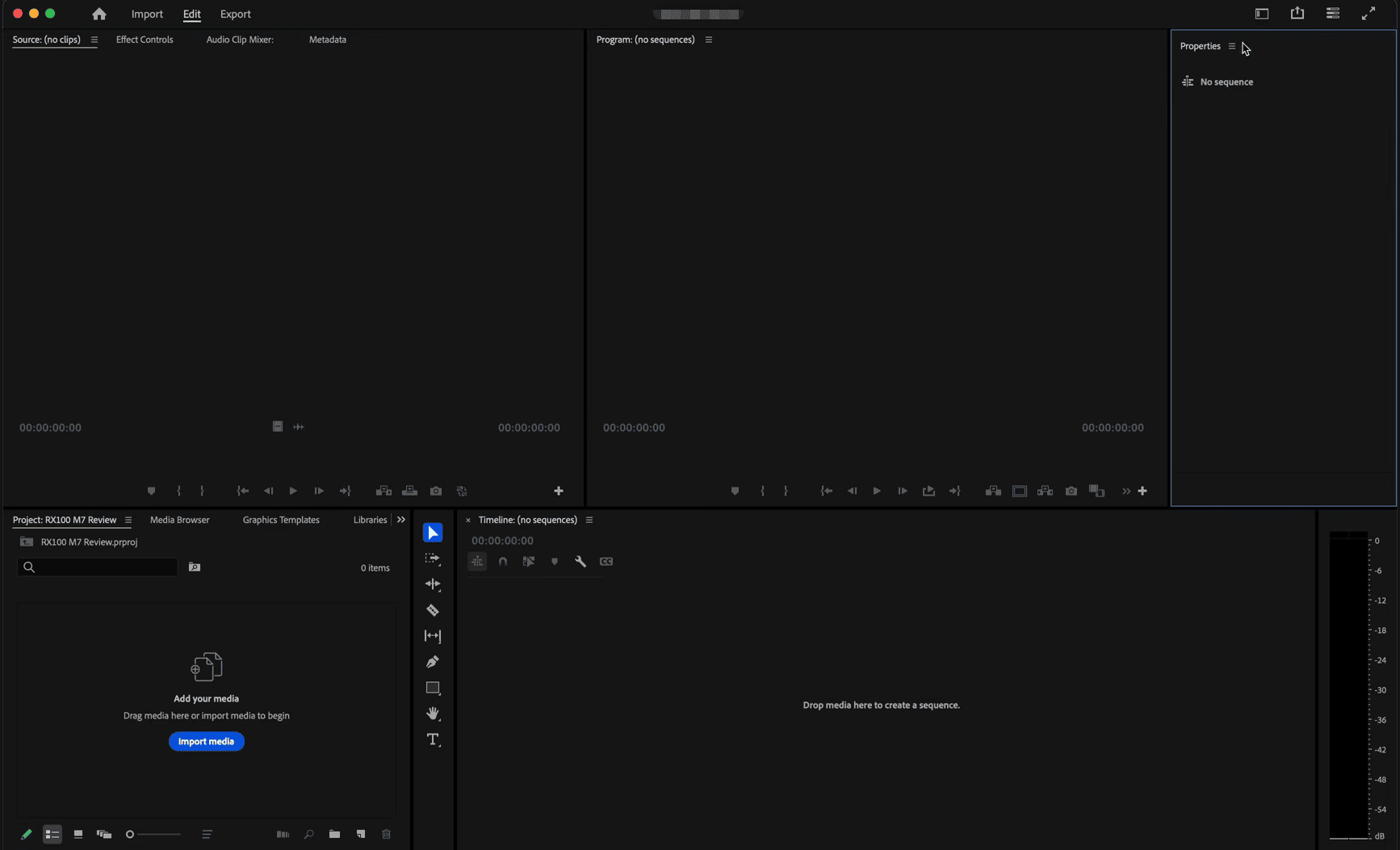
When your footage’s hue, saturation, and brightness have changed, you can do basic correction by opening the Color workspace and selecting Basic Correction to adjust the color or chroma, exposure, and contrast in clips.
Also, you can apply a LUT to the footage, change the temperature and tint properties to adjust the white balance, and adjust the tone by changing exposure, contrast, highlights, shadows, whites, blacks, saturation, etc.
What’s more, Adobe Premiere Pro has various creative looks in the Lumetri Color panel for videos, and you can use RGB and Hue Saturation Curves to create a natural look for your footage. And under this panel, you can also do color corrections and match the color between different shots.
Moreover, you can add a vignette to a clip to direct the viewer’s eyes to a specific subject in the frame. And with the color management tool, you can get the same video color among digital cameras, scanners, and computer monitors.
The Lumetri Color manager in Premiere brings the program in line with Photoshop for video. These tools give you a remarkable amount of color manipulation, along with a great selection of film and HDR looks.https://www.pcmag.com/reviews/adobe-premiere-pro
How to Edit Color in Video on Windows
Fast Track Steps:
- Download and install a video color editor on your PC.
- Import your video clips.
- Use adjustment tools to edit the clip’s color.
- Apply filters or LUT effects for cinematic looks.
- Save and export the video.
1. Launch the Video Color Editor
If you have not installed the software on your PC, click the button below to download and install it. After that, open the software and enter the main interface.
 MiniTool MovieMaker
-
 Split and trim videos to remove redundance.
 - Change video aspect ratio to match screen sizes.
- Add bubble texts, bgm, transitions, and more effects.
- Create PiP or split-screen videos by multitrack editing.
2. Import Videos
From the left side, click the Import Media Files area to add your video and add it to the timeline to begin editing.
3. Use Basic Adjustment Tools
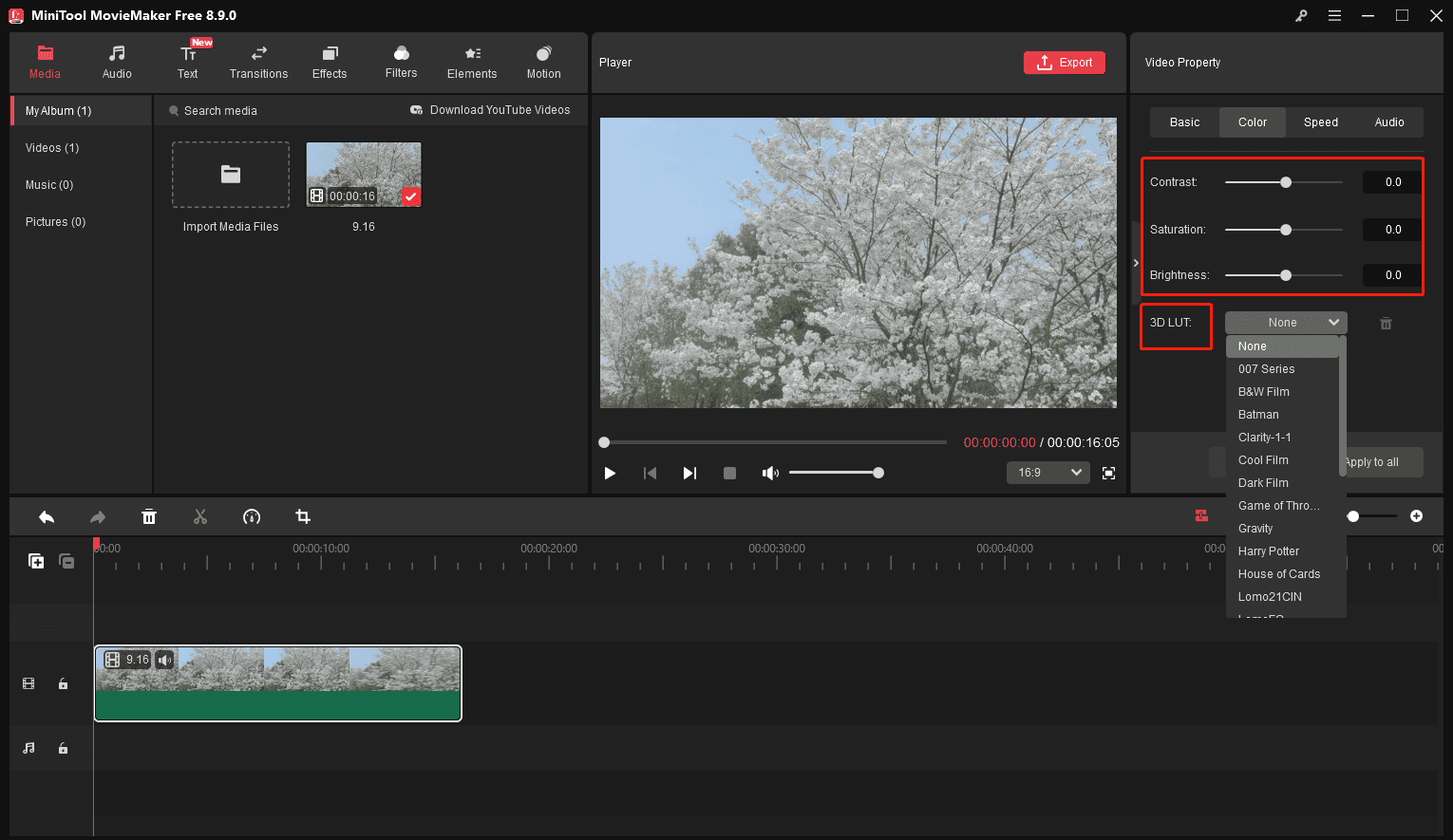
Right-click the clip, and the Video Property section is enabled on the right side. Go to the Color tab, and drag the controllers to edit Contrast, Saturation, and Brightness. You can also expand the 3D LUT dropdown menu and choose an effect to apply to your footage.
Quick Tips:
- Flat-looking footage: Increase contrast and saturation slightly to give the image more vibrancy.
- Underexposed footage: Increase brightness while fine-tuning contrast to prevent overexposure.
- Stylizing: Apply a LUT to change the overall feel quickly.
4. Add a Filter
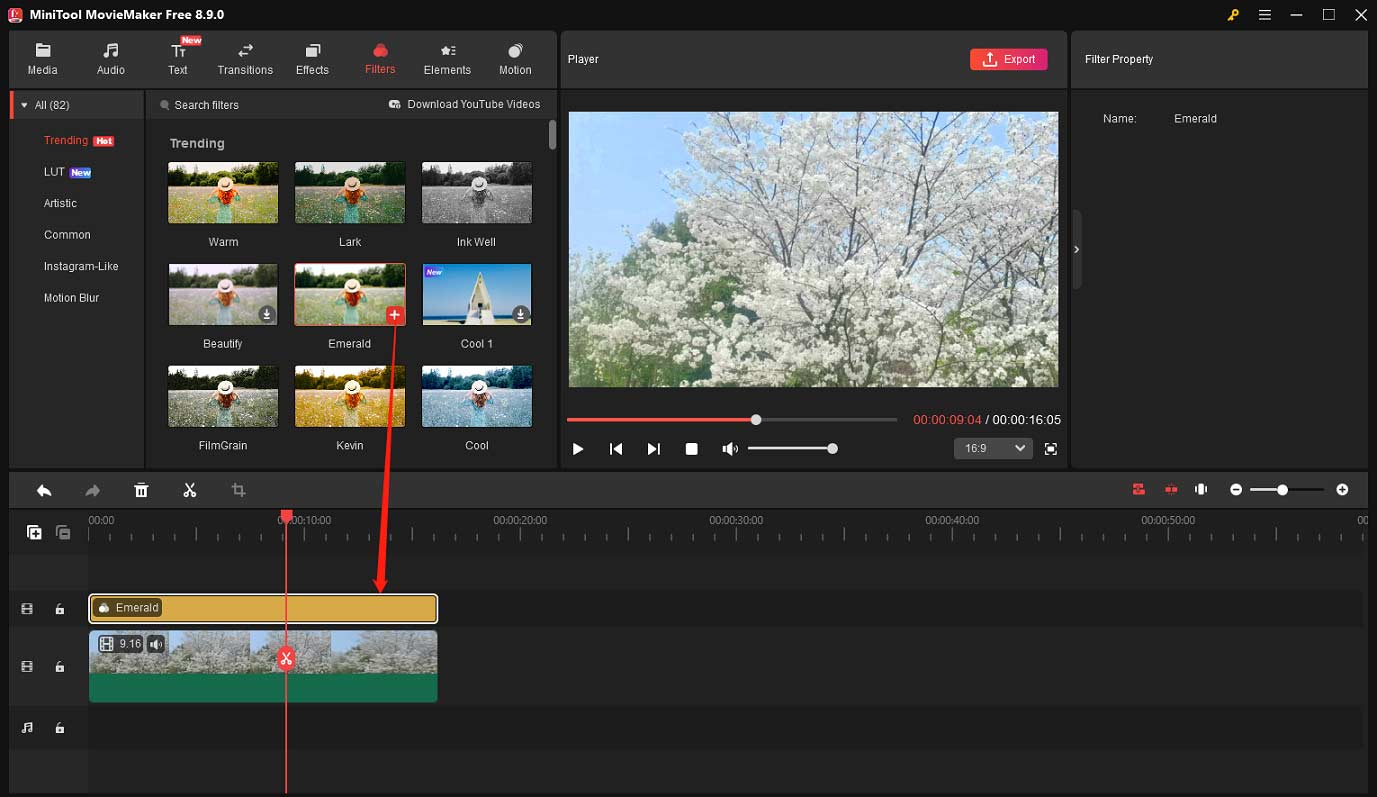
On the top toolbar, click Filters. Browse the preset filters and download the one you like. Then, click the + icon on the thumbnail to add it to the timeline. You can then drag either edge of the layer to adjust its duration.
5. Export the Video
Click Export in the upper-right corner. On the Export window, configure the save path, format, resolution, and frame rate. Finally, click Export again to begin rendering the video.
Conclusion
With the 6 video color editors, you can easily edit the video color by adjusting contrast, saturation, brightness, etc., applying a LUT effect, or adding a filter.
If you have any questions about MiniTool MovieMaker, please let us know via [email protected].
People Also Ask
Correction: Adjust exposure and white balance for a realistic, natural look.
Stylization: Apply LUTs or filters to establish the mood and emotional tone.
Fine-tuning: Refine contrast and saturation to maintain visual consistency across all clips.
About The Author

Position: Columnist
Cora is a tech writer specializing in digital media workflows, with over six years of hands-on experience in video post-production, media transcoding, and screen capture. Her writing is always clear and practical. Cora also produces in-depth software reviews for users across skill levels to help them find the right tool and enjoy video editing.
User Comments :