

This post introduces four reliable frame-by-frame video editors, including MiniTool MovieMaker, Microsoft Clipchamp, Adobe Photoshop, and WeVideo. Use these reliable video editing software applications to edit videos with super precision.
What Is Frame-by-Frame Editing?
Before exploring my top 4 frame-by-frame video editors, let’s first figure out what a frame is in a video and what frame-by-frame editing is.
A video is composed of a sequence of still images. When it is played, each frame flashes, creating the illusion of motion. This mimics how the human eye naturally perceives movement. That’s why videos appear to move.
Definition of Frame-by-Frame Editing
Each static image of the video is a frame. Frame-by-frame editing is the process of analyzing and adjusting a video one single image (frame) at a time to achieve extreme precision or detailed visual effects. In other words, this allows users to manipulate the video at its most granular level.
Common Applications of Frame-by-Frame Editing
Video editing is a pretty broad field, and there are many occasions when frame-by-frame editing is necessary. For instance, trim, split, or remove unwanted frames from a video, sync subtitles to the exact point in the video, track objects frame-by-frame for special effects, and review footage frame-by-frame for analysis.

Top 4 Frame-by-Frame Video Editors
Quick Answer:
- MiniTool MovieMaker
- Microsoft Clipchamp
- Photoshop
- WeVideo
Here is a quick comparison of these applications:
| Software | MiniTool MovieMaker | Clipchamp | Photoshop | WeVideo |
| Platform | Windows | Win11 / Web | Win / Mac | Web |
| Price | Free + paid | Free + paid | Paid subscription | Free + Paid |
| Watermark | No | No | No | Yes, the free version) |
| Timeline zoom | Supported | Supported | No | Supported |
| Frame-by-frame splitting | Supported | Supported | No | Supported |
| Single-frame retouching | No | No | Supported | No |
| Best use case | Entry-level frame-by-frame editing | Built-in frame-by-frame editing | Professional single-frame retouching | Online frame-by-frame editing |
In this section, I’ll introduce four excellent frame-by-frame video editors suitable for beginners.
1. MiniTool MovieMaker
MiniTool MovieMaker is a video editor without watermark, designed for entry-level and casual users who need to create and edit videos in minutes. Featuring a user-friendly and simple interface, the software is easy to use and navigate. Because of this, it’s my favorite video editor for common video tasks, such as trimming, splitting, adding text and stickers, applying filters, etc.
When I enhance footage using the software, I also find that the software allows me to zoom in or zoom out of the timeline. By zooming in on the timeline, I can precisely locate the desired frame for editing. For instance, when I add a filter to a video, I can accurately decide where the filter starts and ends.
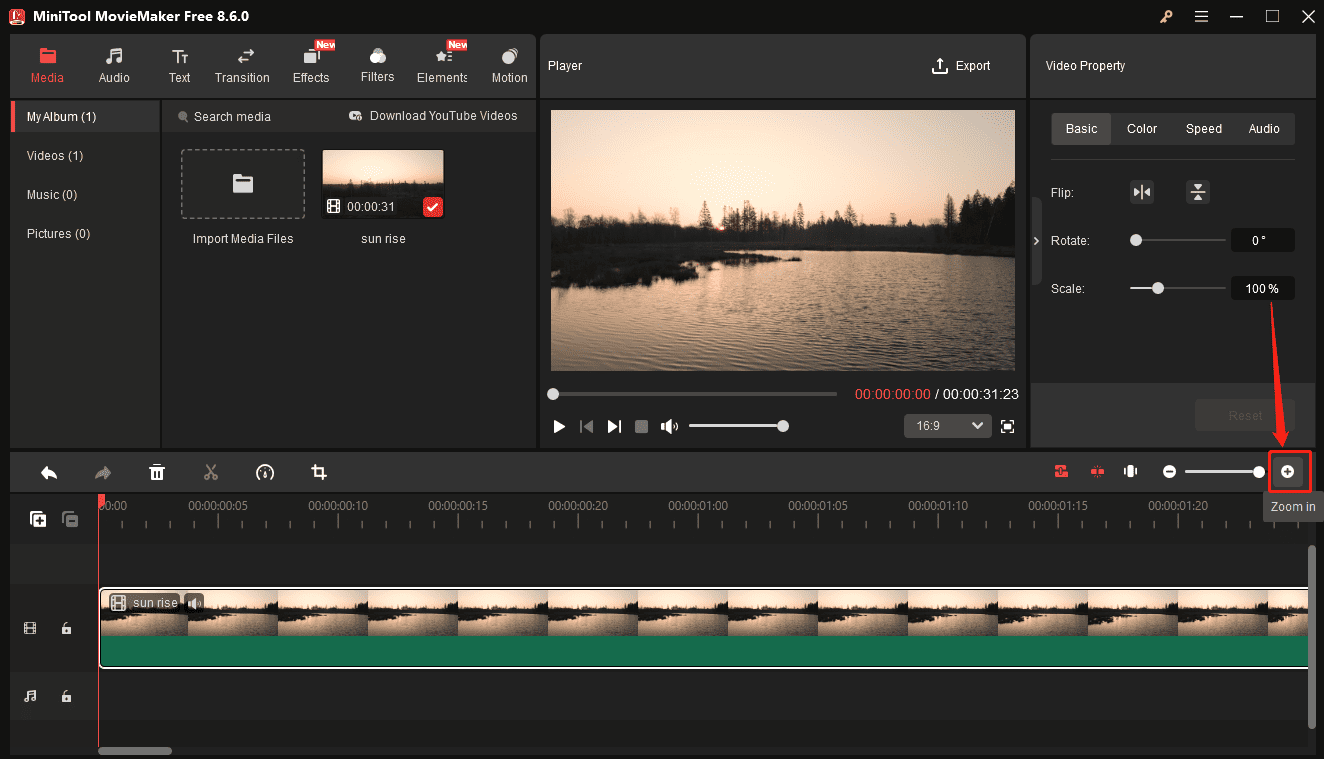
Therefore, MiniTool MovieMaker is a great frame-by-frame video editor for precise editing. With just a few clicks, I can zoom in on the timeline to the extent I want, allowing me to locate the target position of a video precisely.
 MiniTool MovieMaker
-
 Split and trim videos to remove redundance.
 - Change video aspect ratio to match screen sizes.
- Add bubble texts, bgm, transitions, and more effects.
- Create PiP or split-screen videos by multitrack editing.
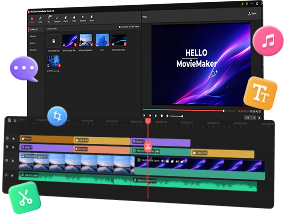
Furthermore, the application is a multi-track video editor. I can easily create video collages from scratch and export them up to 4k resolution. With the frame-by-frame editing technique, I can easily control the details of the footage to achieve the perfect effect.
But for anyone who wants a simple, clear way to join some video clips with transitions, place overlaid objects and text, add music, and bling it all up with some effects, MiniTool MovieMaker may be just the ticket.https://www.pcmag.com/reviews/minitool-moviemaker
2. Microsoft Clipchamp
Microsoft Clipchamp is Windows 11’s built-in video editor, designed to make professional-quality video creation accessible to users of all skill levels, regardless of previous experience. I frequently use this application to complete common tasks, such as freeform cropping, resizing, adjusting colors, and applying transitions.
While using Microsoft Clipchamp, I found that the software allows me to zoom in on the timeline for frame-accurate editing. Therefore, I can split and trim video files precisely or conduct other detailed edits.
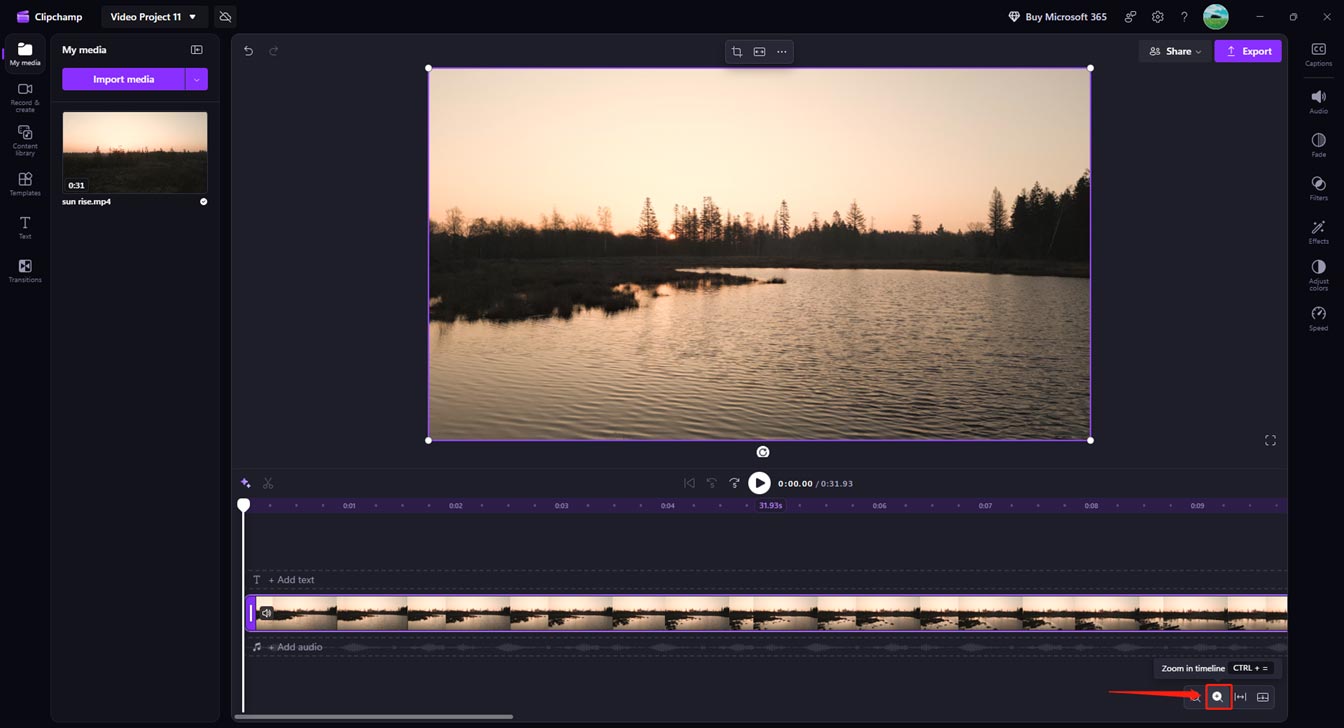
Hence, Microsoft Clipchamp can serve as a simple frame-by-frame video editor for enhanced precision, ensuring higher accuracy in positioning, cutting, and placing elements. Besides, this feature makes it easy to concentrate on a specific time in a video instead of the whole project.
Moreover, I think another excellent part of Microsoft Clipchamp is that it offers a free version with most features available, and it supports exporting videos up to 1080p without watermarks.
Clipchamp targets marketers who want to make quick hits on social media using meme-like, template-based designs. But it's fine for basic clip joining, splitting, and trimming, too. You can even add some panache to your productions via some eye-catching effects.https://www.pcmag.com/reviews/clipchamp
3. Adobe Photoshop
Adobe Photoshop is the professional software for raster image editing, photo retouching, and digital art creation. It is an essential tool for any content creator. Of course, it’s also my commonly used tool for image design.
In addition to powerful image processing, Photoshop can function as a frame-by-frame video editor, although it’s not primarily designed for this purpose. With this application, I can easily convert video frames to layers, which allows for detailed retouching on individual frames. Besides, I can choose to import every 2nd, 3rd, …, or 10th frame, making the animation faster.
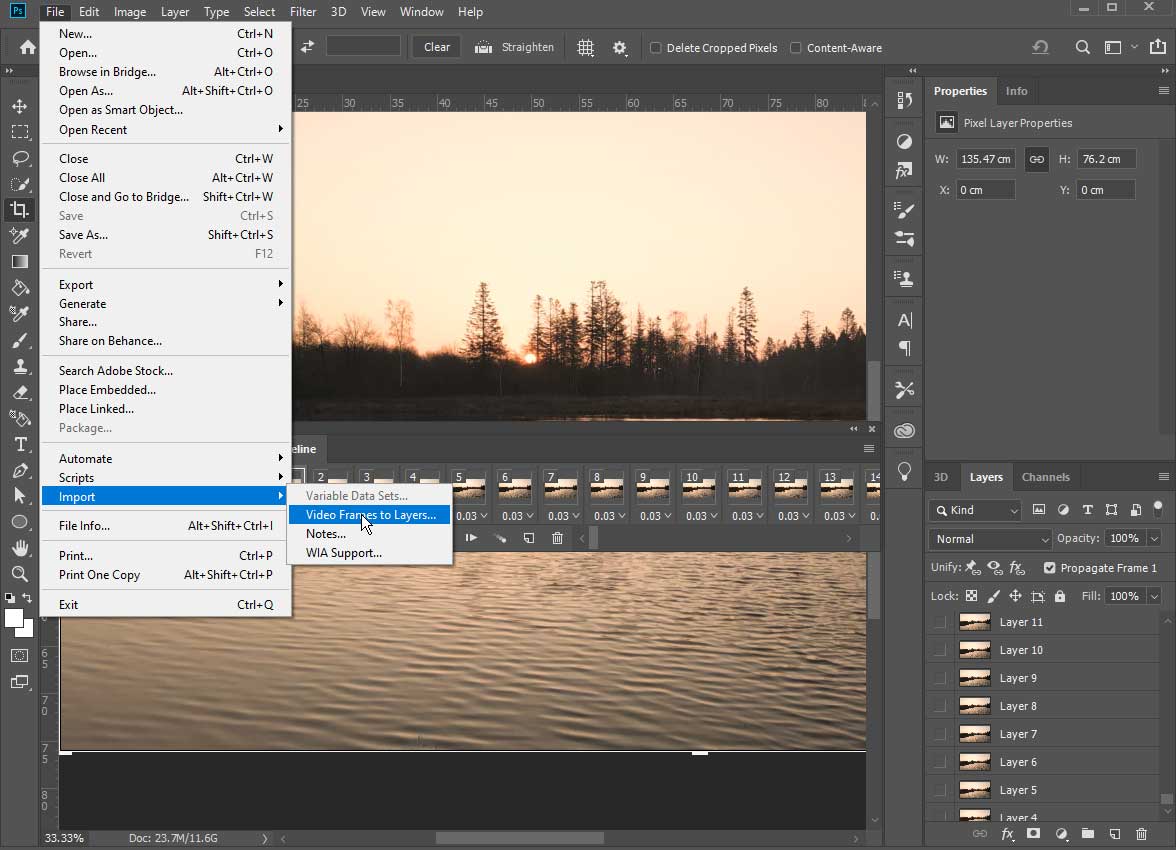
After that, I can control the duration of each frame, remove an object from a single frame using the brush tool, and even create animated GIFs by customizing frames.
While Photoshop is not a dedicated video editor, it provides precision for frame-level video processing. It’s an indispensable tool for content creators who need to paint, retouch, or animate video one frame at a time.
4. WeVideo
WeVideo is an online frame-by-frame video editor that allows me to edit video frame by frame. After adding the target video to the timeline, I can click the Zoom in option on the timeline toolbar to magnify the timeline view. Then, I can navigate to any specific frame I want to modify. For example, I can precisely remove unwanted parts at the beginning or end and adjust the start and end time of text to sync it with the content.
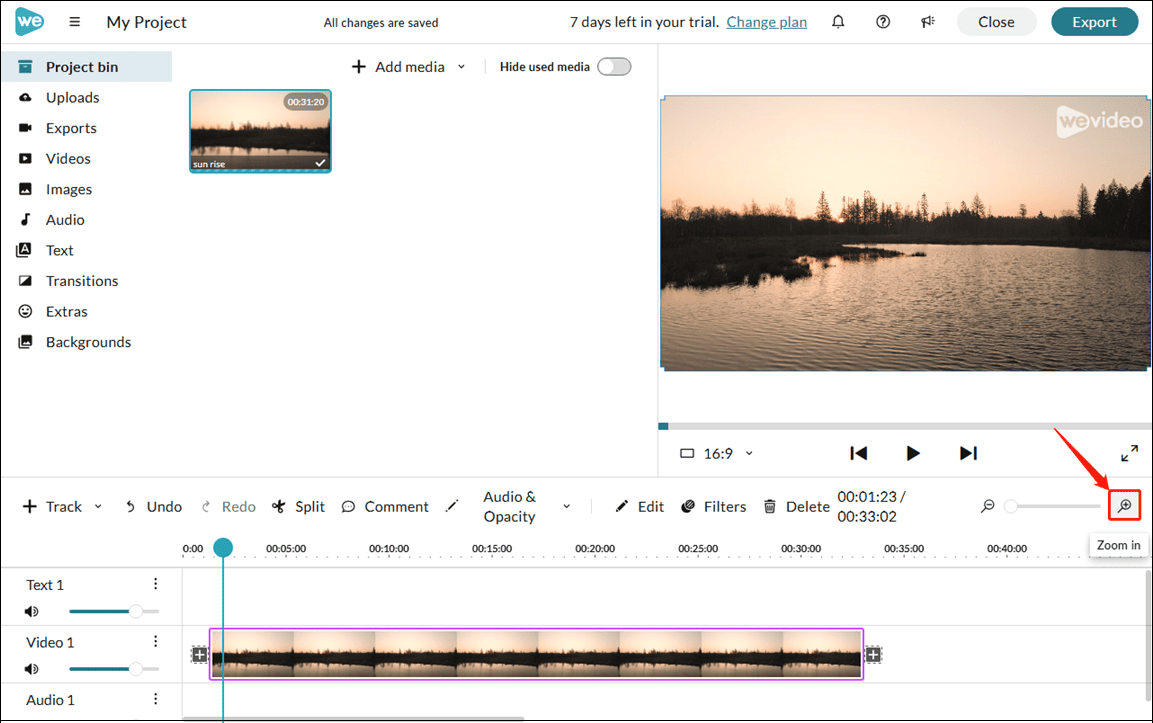
With the Split tool, I can also divide the entire video into separate frames, which gives me the freedom to edit each one independently. After accurately splitting the frames, I can adjust settings like volume, speed, background, subtitles, and chroma key for each segment.
WeVideo also gives me options to fine-tune the clip’s color, contrast, and brightness of every single frame. When I’m done, I can smoothly merge the edited frames back into a complete video using transitions. Finally, I can export my finished project to my computer, share it on social platforms, or save it to a cloud server.
WeVideo is a versatile online video editor with a range of editing features, plus screen recording, voice recording, and GIF creation tools. Thanks to its cloud-based operations, the platform makes it easy to access and edit videos from anywhere, on any system, regardless of configuration.https://www.dealarious.com/blog/wevideo-review
Conclusion
Frame-by-frame video editors ensure a more precise process because it allows users to stop, examine, and modify each single frame independently. In this post, I’ve shared four simple applications for common video tasks with great precision. While they’re no as powerful as DaVinci Resolve or Premiere Pro, they are good enough for casual users or beginners.
Finally, if you encounter any difficulties while using MiniTool MovieMaker, send an email to [email protected] for help.
People Also Ask
2. Import a video and add it to the timeline.
3. Click the three-line menu above the preview window.
4. Select Export still frames.
5. Select the image resolution and format.
6. Click Export.
About The Author

Position: Columnist
Cora is a tech writer specializing in digital media workflows, with over six years of hands-on experience in video post-production, media transcoding, and screen capture. Her writing is always clear and practical. Cora also produces in-depth software reviews for users across skill levels to help them find the right tool and enjoy video editing.
User Comments :